
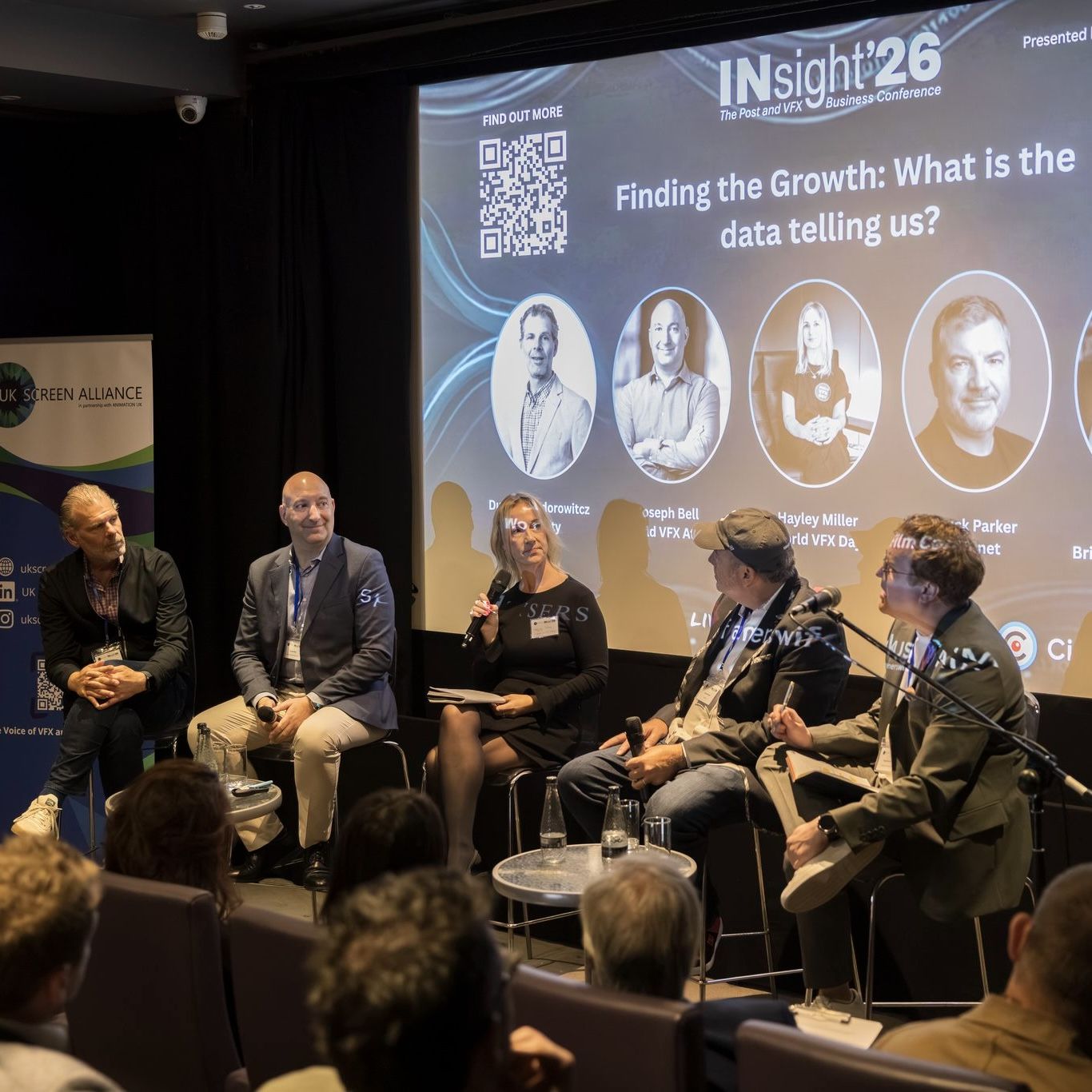
Earlier this month, UK Screen Alliance brought the industry together for INsight'26, its Post-Production and VFX Business Conference, and our very own Gemma and Jess were in the room to soak it all up.
It was a real treat to see so many friends of Post Super on stage. A huge congratulations to Neil Hatton and the whole UK Screen Alliance team on a brilliant event. It was lovely to see Chuck Parker, CEO of our sponsors Sohonet, open the day with the first keynote, and Rowan Bray of Clear Cut Pictures bring everything together at the close.
Here are our key takeaways from the day 👇
1. Your expertise is the value, not the price tag
This message ran through the whole day, from the first keynote to the final session.
Opening INsight'26, Chuck Parker of Sohonet talked about the big forces changing our industry: new business models, new workflows, AI and international competition. His advice was clear. Routine tasks that are easy to automate will come under price pressure, while work that needs judgement and specialist expertise is much harder to replace.
Rowan Bray, MD of Clear Cut Pictures and Chair of the UK Screen Alliance Facilities Council, closed the day alongside Neil Hatton and Gareth Kirkman of the British Film Commission. They agreed the UK should be seen as a premium offer, not a cheap one. US executives on a recent UK facility tour were most impressed by creativity, talent and efficiency, rather than cost.
The panel shared a few ideas to help the industry shift the conversation from price to expertise:
• Update production budgeting software, so new costs like AI, security and sustainability are included from day one
• Create a shared UK Screen quote template, so facilities aren't picked off one by one
• Work together with production teams and broadcasters, and help them understand what the post process really involves
For anyone setting or defending a post budget, being able to explain where the value really sits (the people, the experience, the problem-solving) has never been more important.
2. More work, but leaner teams
Dustin Chodorowicz of Nordicity shared new research for UK Screen Alliance and the BFI. The picture is mixed:
• Around 85% of companies surveyed saw VFX revenue rise in the first half of 2026, mostly from feature films.
• But around three-quarters reduced their overall headcount
• Nearly 42% cut full-time staff
Dustin was clear that the data doesn't prove AI is behind these cuts. Other business pressures could be playing a part.
In the panel that followed, the speakers were broadly positive about the UK. They pointed to our talent pool, production heritage and stable tax relief as reasons clients keep coming back. They put the recent slowdown down mainly to streamers pulling back after the 2022 content boom. Chuck also encouraged the industry to talk directly with the studios and streamers making the spending decisions.
In practice, that means crews may be smaller and stretched further. A good grasp of UK tax relief, like the AudioVisual Expenditure Credit (AVEC), can also make budget conversations with productions much smarter.
3. AI is already showing up in post admin
4. Content security is everyone's job
5. Greener post starts with your decisions
The big picture…

We are Post Super Ltd , your ultimate destination for all things post-production management.